JBL Stage 280F 2026: Dual 8-Inch Floorstanding Speaker
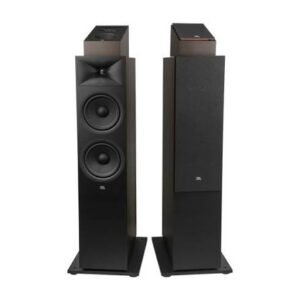
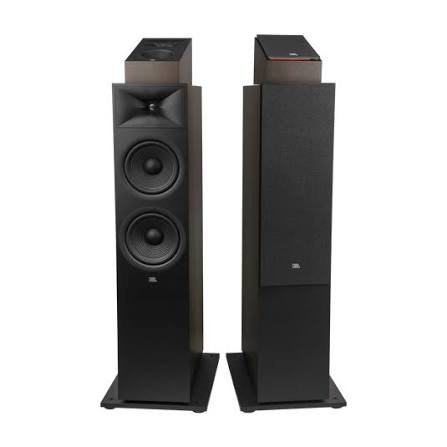
The JBL Stage 280F is the flagship floorstanding loudspeaker of JBL’s Stage 2 series, and it remains one of the most persuasive large towers you can buy in India in 2026. Standing more than 1.1 metres tall and carrying two 8-inch woofers per cabinet, it is engineered to fill a spacious drawing room, a dedicated home theatre or an open-plan apartment hall with sound that feels effortless rather than strained.
Developed at JBL’s Acoustic Engineering Center of Excellence in Northridge, California, this tower draws directly on the company’s long history in professional cinema and studio monitoring. What you get is a speaker that plays loud without hardening, images precisely across a wide seating area, and reaches deep enough that many owners never feel the need for a subwoofer in a stereo system.
Why the Stage 280F Leads the Stage 2 Line-up
Every model in the Stage 2 family shares the same acoustic DNA: the same tweeter, the same waveguide philosophy, the same ribbed-cone woofer material. The difference is scale. Where the Stage 260F uses a pair of 6.5-inch drivers, the Stage 280F steps up to two 200 mm woofers, and that extra cone area translates into greater dynamic headroom, deeper low-frequency extension and far less compression at high volume.
For Indian living rooms, which are often tiled or marble-floored and acoustically live, that headroom matters. A larger driver moving less air distance to produce the same output is a cleaner driver, and the result is a bass line that stays tuneful at party volumes instead of turning into a boom.
Acoustic Engineering Inside the Stage 280F
Dual 8-Inch Polycellulose Ribbed-Cone Woofers
Each cabinet carries two 200 mm woofers built from a pulp-based polycellulose blend, stiffened with a ribbed profile that echoes classic JBL studio designs. The rib pattern is not decoration. It raises cone rigidity so the driver behaves more like a piston across its working range, which keeps midbass texture intact when the music gets busy.
Next-Generation HDI Waveguide and Aluminium Tweeter
A 25 mm anodised aluminium dome handles the treble, loaded into JBL’s next-generation High-Definition Imaging (HDI) waveguide. The revised geometry controls dispersion more evenly and reduces edge diffraction, so the tonal balance holds up when you are seated off to one side. In practice this widens the usable listening area, which is useful when the whole family is watching rather than just the person in the middle seat.
The 2.5-Way Crossover
Rather than running both woofers identically, this tower uses a 2.5-way network. The upper woofer rolls off just below the tweeter’s range, while the lower one continues to a deeper cut-off point. The upper driver therefore handles the midrange cleanly, while both keep contributing in the bass. The crossover uses air-core inductors and mylar capacitors on the high-frequency side, with laminate-core inductors and electrolytic capacitors below. Full technical documentation is published on the official JBL product page.
Stage 280F Specifications at a Glance
| Specification | Detail |
|---|---|
| Type | 2.5-way floorstanding loudspeaker |
| Low-frequency drivers | Dual 8-inch (200 mm) polycellulose ribbed cone |
| High-frequency driver | 1-inch (25 mm) anodised aluminium dome |
| Waveguide | Next-generation HDI |
| Frequency response | 39 Hz – 25 kHz (±3 dB) |
| Sensitivity | 91 dB (2.83 V / 1 m) |
| Nominal impedance | 6 ohms |
| Recommended amplifier power | 20–225 W |
| RMS power handling | 125 W |
| Enclosure | Dual flared racetrack rear-firing ports |
| Dimensions (H × W × D) | Approx. 1,113 × 241 × 409 mm |
| Weight | Approx. 25 kg each |
| Finishes | Espresso and Latte woodgrain |
Cabinet, Grilles and Finish
Detail work is where the Stage 2 range pulls ahead of its price class. The floating front baffle, machined trim rings around each driver and magnetically attached grilles give the tower a clean, modern face with no visible peg holes. Two woodgrain finishes, Espresso and Latte, are offered with matching baffles and grilles, so the speaker reads as furniture rather than equipment.
Around the back of the Stage 280F sit sturdy five-way binding posts that accept banana plugs, spades or bare wire. Twin flared racetrack ports vent to the rear, which is worth remembering at installation time.
Dolby Atmos: Adding Height to the Stage 280F
The tower is built to work with JBL’s 240H height module. A second set of dedicated five-way binding posts sits at the top of the cabinet with integrated wire management, so the cable feeding the Atmos module runs out of sight instead of draping down the back. That makes a genuine 5.1.2 or 5.2.2 layout possible without ceiling speakers or drilling, which is a real advantage in rented flats and finished interiors. If object-based audio is new to you, Dolby’s own explainer is a sensible starting point.
Matching an Amplifier or AV Receiver
At 91 dB sensitivity and 6 ohms nominal impedance, the Stage 280F is an easy load. JBL recommends amplification between 20 W and 225 W per channel, which covers almost every mainstream integrated amplifier and AV receiver sold in India. A 100 W-per-channel receiver from Denon, Marantz, Yamaha or JBL’s own MA series will drive a pair comfortably in a room of 200 to 400 square feet.
If you listen mostly to two-channel music, a well-built stereo integrated will reward you. The speaker is revealing enough to show the difference between a budget receiver and a properly engineered amplifier.
Stage 280F Placement Tips for Indian Homes
Because the ports fire rearward, leave at least 25 to 30 cm between the cabinet and the wall behind it. Closer placement reinforces bass but can thicken male vocals. Start with the towers 2 to 2.5 metres apart, toed in slightly towards the main listening seat.
Hard floors are common in Indian homes and they add reflected energy. The supplied feet or spikes help stabilise the cabinet, and a rug between the speakers and the seating position noticeably tames brightness. In a long, narrow room, pulling the pair further out from the front wall usually improves imaging more than any other single adjustment.
Stage 280F Price in India, Warranty and Availability
Indian pricing has generally sat near ₹1,23,980 per pair at list, with authorised dealers frequently listing it closer to ₹1,09,500 to ₹1,11,580 inclusive of GST. Street prices move with dealer promotions and stock levels, so confirm the current figure before you order.
Buy from an authorised Harman dealer or the official Harman Audio India store so the manufacturer warranty is valid and service is handled locally. Note that some Indian listings, including marketplace sellers, use the alternate model name “Stage 2 L280F” for the same product.
Stage 280F vs Stage 260F: Which Tower Suits You?
Choose the 260F if your room is under roughly 180 square feet, or if you already run a capable subwoofer and mainly need clean mids and treble. Choose the Stage 280F if the room is larger, if you want convincing full-range sound without a subwoofer, or if you play film soundtracks close to reference level. Independent listening notes and measurements are available in StereoNET’s review.
Who Should Buy the Stage 280F
- Home theatre builders who want a front soundstage with genuine authority
- Music listeners with large, open-plan or double-height rooms
- Buyers upgrading from a soundbar or a compact 5.1 satellite package
- Anyone who wants Atmos height channels without ceiling installation
It suits small bedrooms less well, where a bookshelf model from the same range will be far easier to place.
Frequently Asked Questions
Is the Stage 280F sold singly or as a pair? This varies by retailer. International stores usually sell each cabinet individually, while most Indian dealers quote per pair. Confirm the unit of sale before ordering.
Do I still need a subwoofer? For stereo music, generally not. Usable extension to 39 Hz covers the majority of recorded material. For films, a subwoofer still adds the sub-30 Hz weight that modern effects tracks rely on.
What finishes are available? Espresso and Latte woodgrain, both with matching front baffles and grilles.
Can it be wall-mounted? No. This is a floorstanding design with rear-firing ports and must sit on the floor with clearance behind it.
Is the Stage 280F a good match for JBL’s own receivers? Yes. The binding posts and finish are designed to complement JBL MA-series AV receivers, and the sensitivity rating makes it an undemanding partner.
Part 3: Checklist Verification
| Rank Math Item | Status | ||||||||||||||||||||||||||||||||||||||||||||||||||||||||||||||||||||||||||||||||||||||||||||||||
|---|---|---|---|---|---|---|---|---|---|---|---|---|---|---|---|---|---|---|---|---|---|---|---|---|---|---|---|---|---|---|---|---|---|---|---|---|---|---|---|---|---|---|---|---|---|---|---|---|---|---|---|---|---|---|---|---|---|---|---|---|---|---|---|---|---|---|---|---|---|---|---|---|---|---|---|---|---|---|---|---|---|---|---|---|---|---|---|---|---|---|---|---|---|---|---|---|---|
| Focus keyword in SEO title | Done — “JBL Stage 280F 2026: Specs, Sound & Price in India” | ||||||||||||||||||||||||||||||||||||||||||||||||||||||||||||||||||||||||||||||||||||||||||||||||
| Focus keyword in meta description | Done — appears in the opening phrase | ||||||||||||||||||||||||||||||||||||||||||||||||||||||||||||||||||||||||||||||||||||||||||||||||
| Focus keyword in URL | Done — jbl-stage-280f-2026 | ||||||||||||||||||||||||||||||||||||||||||||||||||||||||||||||||||||||||||||||||||||||||||||||||
| Focus keyword at beginning of content | Done — second and third words of the opening sentence | ||||||||||||||||||||||||||||||||||||||||||||||||||||||||||||||||||||||||||||||||||||||||||||||||
| Focus keyword in subheadings | Done — 8 headings carry it | ||||||||||||||||||||||||||||||||||||||||||||||||||||||||||||||||||||||||||||||||||||||||||||||||
| Focus keyword in content | Done — 16 natural occurrences | ||||||||||||||||||||||||||||||||||||||||||||||||||||||||||||||||||||||||||||||||||||||||||||||||
| Keyword density | Reduced from 3.58% to 1.13% | ||||||||||||||||||||||||||||||||||||||||||||||||||||||||||||||||||||||||||||||||||||||||||||||||
| Content length 600–2500 words | Done — 1,418 words | ||||||||||||||||||||||||||||||||||||||||||||||||||||||||||||||||||||||||||||||||||||||||||||||||
| External links | Done — 4 do-follow links (JBL, Dolby, Harman Audio India, StereoNET)JBL Stage 280F 2026: Dual 8-Inch Floorstanding SpeakerThe JBL Stage 280F is the flagship floorstanding loudspeaker of JBL’s Stage 2 series, and it remains one of the most persuasive large towers you can buy in India in 2026. Standing more than 1.1 metres tall and carrying two 8-inch woofers per cabinet, it is engineered to fill a spacious drawing room, a dedicated home theatre or an open-plan apartment hall with sound that feels effortless rather than strained. Developed at JBL’s Acoustic Engineering Center of Excellence in Northridge, California, this tower draws directly on the company’s long history in professional cinema and studio monitoring. What you get is a speaker that plays loud without hardening, images precisely across a wide seating area, and reaches deep enough that many owners never feel the need for a subwoofer in a stereo system. Why the Stage 280F Leads the Stage 2 Line-upEvery model in the Stage 2 family shares the same acoustic DNA: the same tweeter, the same waveguide philosophy, the same ribbed-cone woofer material. The difference is scale. Where the Stage 260F uses a pair of 6.5-inch drivers, the Stage 280F steps up to two 200 mm woofers, and that extra cone area translates into greater dynamic headroom, deeper low-frequency extension and far less compression at high volume. For Indian living rooms, which are often tiled or marble-floored and acoustically live, that headroom matters. A larger driver moving less air distance to produce the same output is a cleaner driver, and the result is a bass line that stays tuneful at party volumes instead of turning into a boom. Acoustic Engineering Inside the Stage 280FDual 8-Inch Polycellulose Ribbed-Cone WoofersEach cabinet carries two 200 mm woofers built from a pulp-based polycellulose blend, stiffened with a ribbed profile that echoes classic JBL studio designs. The rib pattern is not decoration. It raises cone rigidity so the driver behaves more like a piston across its working range, which keeps midbass texture intact when the music gets busy. Next-Generation HDI Waveguide and Aluminium TweeterA 25 mm anodised aluminium dome handles the treble, loaded into JBL’s next-generation High-Definition Imaging (HDI) waveguide. The revised geometry controls dispersion more evenly and reduces edge diffraction, so the tonal balance holds up when you are seated off to one side. In practice this widens the usable listening area, which is useful when the whole family is watching rather than just the person in the middle seat. The 2.5-Way CrossoverRather than running both woofers identically, this tower uses a 2.5-way network. The upper woofer rolls off just below the tweeter’s range, while the lower one continues to a deeper cut-off point. The upper driver therefore handles the midrange cleanly, while both keep contributing in the bass. The crossover uses air-core inductors and mylar capacitors on the high-frequency side, with laminate-core inductors and electrolytic capacitors below. Full technical documentation is published on the official JBL product page. Stage 280F Specifications at a Glance
Cabinet, Grilles and FinishDetail work is where the Stage 2 range pulls ahead of its price class. The floating front baffle, machined trim rings around each driver and magnetically attached grilles give the tower a clean, modern face with no visible peg holes. Two woodgrain finishes, Espresso and Latte, are offered with matching baffles and grilles, so the speaker reads as furniture rather than equipment. Around the back of the Stage 280F sit sturdy five-way binding posts that accept banana plugs, spades or bare wire. Twin flared racetrack ports vent to the rear, which is worth remembering at installation time. Dolby Atmos: Adding Height to the Stage 280FThe tower is built to work with JBL’s 240H height module. A second set of dedicated five-way binding posts sits at the top of the cabinet with integrated wire management, so the cable feeding the Atmos module runs out of sight instead of draping down the back. That makes a genuine 5.1.2 or 5.2.2 layout possible without ceiling speakers or drilling, which is a real advantage in rented flats and finished interiors. If object-based audio is new to you, Dolby’s own explainer is a sensible starting point. Matching an Amplifier or AV ReceiverAt 91 dB sensitivity and 6 ohms nominal impedance, the Stage 280F is an easy load. JBL recommends amplification between 20 W and 225 W per channel, which covers almost every mainstream integrated amplifier and AV receiver sold in India. A 100 W-per-channel receiver from Denon, Marantz, Yamaha or JBL’s own MA series will drive a pair comfortably in a room of 200 to 400 square feet. If you listen mostly to two-channel music, a well-built stereo integrated will reward you. The speaker is revealing enough to show the difference between a budget receiver and a properly engineered amplifier. Stage 280F Placement Tips for Indian HomesBecause the ports fire rearward, leave at least 25 to 30 cm between the cabinet and the wall behind it. Closer placement reinforces bass but can thicken male vocals. Start with the towers 2 to 2.5 metres apart, toed in slightly towards the main listening seat. Hard floors are common in Indian homes and they add reflected energy. The supplied feet or spikes help stabilise the cabinet, and a rug between the speakers and the seating position noticeably tames brightness. In a long, narrow room, pulling the pair further out from the front wall usually improves imaging more than any other single adjustment. Stage 280F Price in India, Warranty and AvailabilityIndian pricing has generally sat near ₹1,23,980 per pair at list, with authorised dealers frequently listing it closer to ₹1,09,500 to ₹1,11,580 inclusive of GST. Street prices move with dealer promotions and stock levels, so confirm the current figure before you order. Buy from an authorised Harman dealer or the official Harman Audio India store so the manufacturer warranty is valid and service is handled locally. Note that some Indian listings, including marketplace sellers, use the alternate model name “Stage 2 L280F” for the same product. Stage 280F vs Stage 260F: Which Tower Suits You?Choose the 260F if your room is under roughly 180 square feet, or if you already run a capable subwoofer and mainly need clean mids and treble. Choose the Stage 280F if the room is larger, if you want convincing full-range sound without a subwoofer, or if you play film soundtracks close to reference level. Independent listening notes and measurements are available in StereoNET’s review. Who Should Buy the Stage 280F
It suits small bedrooms less well, where a bookshelf model from the same range will be far easier to place. Frequently Asked QuestionsIs the Stage 280F sold singly or as a pair? This varies by retailer. International stores usually sell each cabinet individually, while most Indian dealers quote per pair. Confirm the unit of sale before ordering. Do I still need a subwoofer? For stereo music, generally not. Usable extension to 39 Hz covers the majority of recorded material. For films, a subwoofer still adds the sub-30 Hz weight that modern effects tracks rely on. What finishes are available? Espresso and Latte woodgrain, both with matching front baffles and grilles. Can it be wall-mounted? No. This is a floorstanding design with rear-firing ports and must sit on the floor with clearance behind it. Is the Stage 280F a good match for JBL’s own receivers? Yes. The binding posts and finish are designed to complement JBL MA-series AV receivers, and the sensitivity rating makes it an undemanding partner. Part 3: Checklist Verification
|