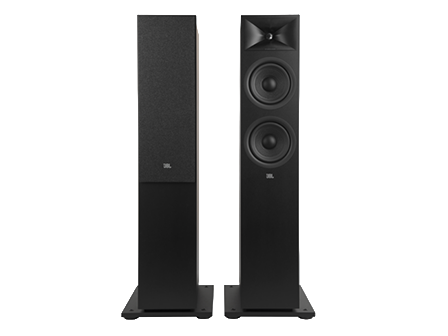
JBL Stage 260F 2026: The Tower Speaker That Fills the Room
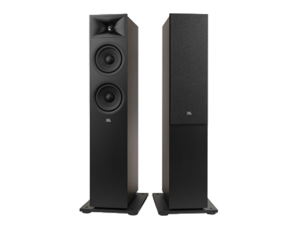
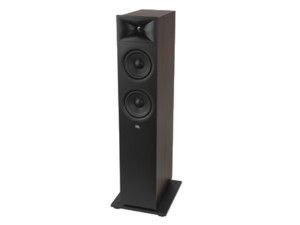
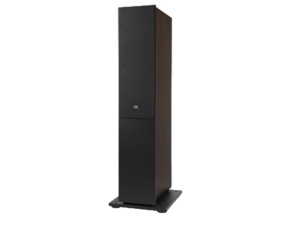
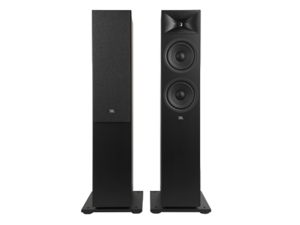
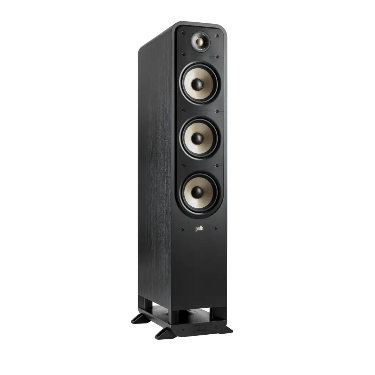
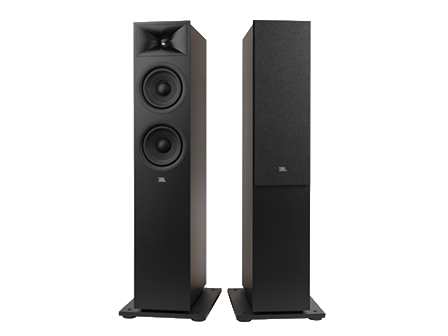
The JBL Stage 260F is a 2.5-way floorstanding loudspeaker built for listeners who want genuine full-range sound without stepping into audiophile-only pricing. Designed and engineered at Harman’s Acoustic Engineering Center of Excellence in Northridge, California, it sits in the middle of the Stage 2 range — considerably more capable than a bookshelf pair, yet slim enough to live comfortably in a normal Indian apartment. If you have been shortlisting a tower speaker that handles film soundtracks, classical recordings and late-night streaming sessions with the same composure, this one deserves a serious audition.
Why the JBL Stage 260F Feels Bigger Than It Looks
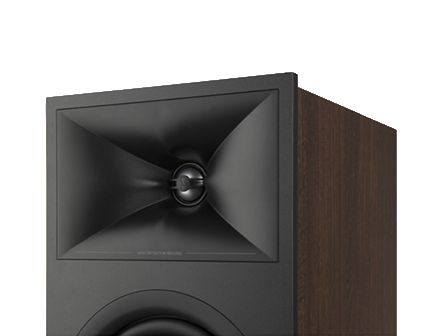
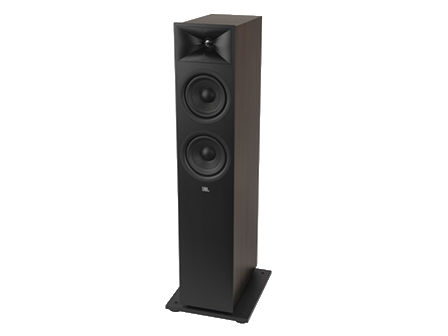
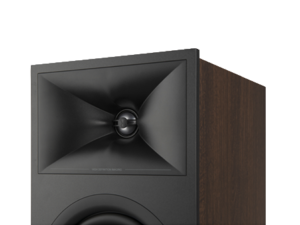
Most tower speakers in this segment simply stack two woofers and hope for the best. The JBL Stage 260F takes a more considered route. Two 165 mm polycellulose ribbed cone woofers share the low-frequency workload, while a 25 mm anodised aluminium dome tweeter sits inside a next-generation High-Definition Imaging (HDI) waveguide that JBL developed specifically for this series.
The result is that the JBL Stage 260F projects a wide, stable soundstage rather than a narrow beam of sound. Vocals stay centred and intelligible even when you are seated off to one side — a practical advantage in Indian living rooms, where the sofa is rarely positioned in a perfect equilateral triangle with the speakers. You get scale and authority from a cabinet that occupies barely a foot of floor width.
JBL Stage 260F Specifications at a Glance
Here is how the JBL Stage 260F measures up on paper before you hear it in person.
| Specification | Detail |
|---|---|
| Type | 2.5-way floorstanding loudspeaker |
| Low-frequency drivers | Dual 165 mm (6.5-inch) polycellulose ribbed cone woofers |
| High-frequency driver | 25 mm (1-inch) anodised aluminium dome tweeter |
| Waveguide | Next-generation HDI horn |
| Frequency response (±6 dB) | 40 Hz – 25 kHz |
| Sensitivity (1 m, 2.83 V) | 90 dB |
| Nominal impedance | 6 ohms |
| Crossover frequencies | 1.3 kHz / 1.7 kHz |
| Recommended amplifier power | 20 – 225 W |
| Enclosure | Bass reflex, dual flared racetrack rear-firing ports |
| Terminals | 5-way binding posts + dedicated Atmos passthrough posts |
| Dimensions (H × W × D) | 1036 × 310 × 362 mm (with base) |
| Weight | 19.5 kg each |
| Finishes | Espresso or Latte woodgrain |
Specifications are published by Harman and are subject to revision; always confirm against the current official JBL India product page before you buy.
Inside the Acoustic Engineering
Polycellulose ribbed cone woofers
The cones use a pure pulp base blended with additional materials for stiffness, and the ribbed profile is a visual nod to classic JBL monitors. Stiffer cones flex less under load, which keeps the bass notes of the JBL Stage 260F tight instead of woolly. Paired with the rear-firing flared ports, the low end stays articulate at realistic apartment listening levels rather than turning into a one-note thud.
HDI waveguide and aluminium tweeter
Waveguide geometry determines how evenly a speaker distributes treble across a room. JBL reworked the horn profile for this generation to reduce diffraction and improve off-axis consistency, so the sound your ears receive after the first reflection off a wall closely resembles the direct sound. That is precisely what makes a modest room feel acoustically larger and less fatiguing over long listening sessions.
The 2.5-way crossover, explained simply
In a conventional two-way tower, both woofers reproduce identical frequencies. Here, the upper woofer is crossed over just below the tweeter’s operating range while the lower woofer rolls off earlier and concentrates on bass. Midrange congestion drops noticeably, dialogue gains clarity, and both drivers still contribute to low-frequency output. High-frequency crossover sections use air-core inductors and Mylar capacitors, with laminate-core inductors and electrolytic capacitors on the low-frequency side.
Build Quality, Finish and Everyday Practicality
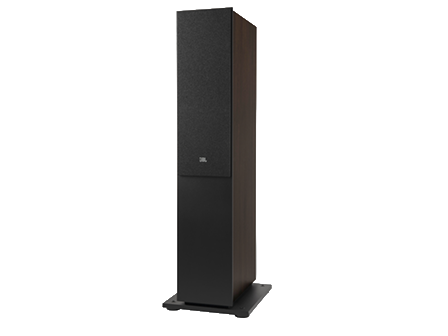
The JBL Stage 260F carries cabinet details that are unusual at this price: a floating front baffle, magnetically attached grilles that leave no visible mounting holes, and trim rings that tidy up the driver surrounds. Espresso and Latte woodgrain finishes both pair sensibly with Indian interiors — Espresso for teak and walnut furniture, Latte for lighter, contemporary rooms.
At 19.5 kg apiece these are substantial but manageable, and the outrigger base improves stability on tiled and wooden floors. If you have young children or pets at home, keep the grilles fitted; they attach and detach without tools.
Dolby Atmos Ready from Day One
Height channels are where this tower quietly earns its keep. The JBL Stage 260F is designed to accept the matching 240H height module on top, and dedicated five-way binding posts at the base and top route the height-channel wiring internally. No trailing cables down the side of the speaker, no untidy loops behind the rack.
For anyone building a 5.1.2 or 7.1.2 system in stages, this matters: you can start with a stereo pair now and add immersive height channels later without rewiring the room. Learn more about how height channels work on the official Dolby Atmos site.
Choosing the Right Amplifier for the JBL Stage 260F
With 90 dB sensitivity and a 6-ohm nominal impedance, the JBL Stage 260F is not a difficult load. A competent AV receiver rated between 80 W and 150 W per channel into 6 ohms will drive it convincingly in rooms up to roughly 350 square feet.
A few practical pointers for Indian buyers:
- Match the impedance setting. If your receiver has a 6-ohm/8-ohm switch, set it correctly to avoid protection shutdowns during long sessions.
- Do not under-power it. A clipping 40 W amplifier stresses tweeters far more than a clean 150 W one.
- Run room correction. Dirac Live, Audyssey or YPAO will meaningfully tame the bass reinforcement caused by concrete walls and hard flooring.
- Use decent cable. A 14 AWG oxygen-free copper run is sufficient for typical distances; exotic cable is not required.
Placement Tips That Make a Real Difference
Because the JBL Stage 260F fires its ports rearwards, leave at least 25–30 cm of clearance between the rear panel and the wall. Pushing these towers into a corner will exaggerate bass and blur mid-bass detail.
Toe the speakers in slightly so their axes converge just behind your head. Keep the tweeters near seated ear height — the cabinet is tall enough that this generally happens naturally. In rooms with granite, marble or vitrified tile flooring, a rug between the listening position and the speakers will reduce early reflections and noticeably sharpen imaging. Indian coastal cities bring humidity, so avoid placing the cabinets against damp external walls or in the direct path of an air conditioner.
Who Should Buy the JBL Stage 260F?
A strong match if you want one pair of speakers that performs equally well for music and movies, plan to add Dolby Atmos height channels later, listen in a medium-sized room, or are upgrading from a soundbar and want a genuine step change in scale.
Consider something else if you listen exclusively in a small bedroom where a bookshelf pair would suffice, need response well below 40 Hz without a subwoofer, or cannot provide the rear-wall clearance the ports require.
Frequently Asked Questions
Does the JBL Stage 260F need a subwoofer?
Not for music. Rated response reaches 40 Hz, which covers most instruments comfortably. For film, adding a subwoofer such as the Stage 220P will reproduce the lowest effects and take strain off the towers during loud passages.
Is the JBL Stage 260F sold individually or as a pair?
Retail listings vary. Some sellers list each speaker separately while others bundle a stereo pair, so confirm the quantity on the product page before checkout.
What is the warranty in India?
Authorised Harman dealers supply a standard manufacturer warranty. Buy only from an authorised channel — grey-market imports are not covered for service in India.
Can it be wall-mounted?
No. This is a floorstanding design with a stabilising base and rear ports, and it must be positioned on the floor.
JBL Stage 260F 2026: The Tower Speaker That Fills the Room
The JBL Stage 260F is a 2.5-way floorstanding loudspeaker built for listeners who want genuine full-range sound without stepping into audiophile-only pricing. Designed and engineered at Harman’s Acoustic Engineering Center of Excellence in Northridge, California, it sits in the middle of the Stage 2 range — considerably more capable than a bookshelf pair, yet slim enough to live comfortably in a normal Indian apartment. If you have been shortlisting a tower speaker that handles film soundtracks, classical recordings and late-night streaming sessions with the same composure, this one deserves a serious audition.
Why the JBL Stage 260F Feels Bigger Than It Looks
Most tower speakers in this segment simply stack two woofers and hope for the best. The JBL Stage 260F takes a more considered route. Two 165 mm polycellulose ribbed cone woofers share the low-frequency workload, while a 25 mm anodised aluminium dome tweeter sits inside a next-generation High-Definition Imaging (HDI) waveguide that JBL developed specifically for this series.
The result is that the JBL Stage 260F projects a wide, stable soundstage rather than a narrow beam of sound. Vocals stay centred and intelligible even when you are seated off to one side — a practical advantage in Indian living rooms, where the sofa is rarely positioned in a perfect equilateral triangle with the speakers. You get scale and authority from a cabinet that occupies barely a foot of floor width.
JBL Stage 260F Specifications at a Glance
Here is how the JBL Stage 260F measures up on paper before you hear it in person.
| Specification | Detail |
|---|---|
| Type | 2.5-way floorstanding loudspeaker |
| Low-frequency drivers | Dual 165 mm (6.5-inch) polycellulose ribbed cone woofers |
| High-frequency driver | 25 mm (1-inch) anodised aluminium dome tweeter |
| Waveguide | Next-generation HDI horn |
| Frequency response (±6 dB) | 40 Hz – 25 kHz |
| Sensitivity (1 m, 2.83 V) | 90 dB |
| Nominal impedance | 6 ohms |
| Crossover frequencies | 1.3 kHz / 1.7 kHz |
| Recommended amplifier power | 20 – 225 W |
| Enclosure | Bass reflex, dual flared racetrack rear-firing ports |
| Terminals | 5-way binding posts + dedicated Atmos passthrough posts |
| Dimensions (H × W × D) | 1036 × 310 × 362 mm (with base) |
| Weight | 19.5 kg each |
| Finishes | Espresso or Latte woodgrain |
Specifications are published by Harman and are subject to revision; always confirm against the current official JBL India product page before you buy.
Inside the Acoustic Engineering
Polycellulose ribbed cone woofers
The cones use a pure pulp base blended with additional materials for stiffness, and the ribbed profile is a visual nod to classic JBL monitors. Stiffer cones flex less under load, which keeps the bass notes of the JBL Stage 260F tight instead of woolly. Paired with the rear-firing flared ports, the low end stays articulate at realistic apartment listening levels rather than turning into a one-note thud.
HDI waveguide and aluminium tweeter
Waveguide geometry determines how evenly a speaker distributes treble across a room. JBL reworked the horn profile for this generation to reduce diffraction and improve off-axis consistency, so the sound your ears receive after the first reflection off a wall closely resembles the direct sound. That is precisely what makes a modest room feel acoustically larger and less fatiguing over long listening sessions.
The 2.5-way crossover, explained simply
In a conventional two-way tower, both woofers reproduce identical frequencies. Here, the upper woofer is crossed over just below the tweeter’s operating range while the lower woofer rolls off earlier and concentrates on bass. Midrange congestion drops noticeably, dialogue gains clarity, and both drivers still contribute to low-frequency output. High-frequency crossover sections use air-core inductors and Mylar capacitors, with laminate-core inductors and electrolytic capacitors on the low-frequency side.
Build Quality, Finish and Everyday Practicality
The JBL Stage 260F carries cabinet details that are unusual at this price: a floating front baffle, magnetically attached grilles that leave no visible mounting holes, and trim rings that tidy up the driver surrounds. Espresso and Latte woodgrain finishes both pair sensibly with Indian interiors — Espresso for teak and walnut furniture, Latte for lighter, contemporary rooms.
At 19.5 kg apiece these are substantial but manageable, and the outrigger base improves stability on tiled and wooden floors. If you have young children or pets at home, keep the grilles fitted; they attach and detach without tools.
Dolby Atmos Ready from Day One
Height channels are where this tower quietly earns its keep. The JBL Stage 260F is designed to accept the matching 240H height module on top, and dedicated five-way binding posts at the base and top route the height-channel wiring internally. No trailing cables down the side of the speaker, no untidy loops behind the rack.
For anyone building a 5.1.2 or 7.1.2 system in stages, this matters: you can start with a stereo pair now and add immersive height channels later without rewiring the room. Learn more about how height channels work on the official Dolby Atmos site.
Choosing the Right Amplifier for the JBL Stage 260F
With 90 dB sensitivity and a 6-ohm nominal impedance, the JBL Stage 260F is not a difficult load. A competent AV receiver rated between 80 W and 150 W per channel into 6 ohms will drive it convincingly in rooms up to roughly 350 square feet.
A few practical pointers for Indian buyers:
- Match the impedance setting. If your receiver has a 6-ohm/8-ohm switch, set it correctly to avoid protection shutdowns during long sessions.
- Do not under-power it. A clipping 40 W amplifier stresses tweeters far more than a clean 150 W one.
- Run room correction. Dirac Live, Audyssey or YPAO will meaningfully tame the bass reinforcement caused by concrete walls and hard flooring.
- Use decent cable. A 14 AWG oxygen-free copper run is sufficient for typical distances; exotic cable is not required.
Placement Tips That Make a Real Difference
Because the JBL Stage 260F fires its ports rearwards, leave at least 25–30 cm of clearance between the rear panel and the wall. Pushing these towers into a corner will exaggerate bass and blur mid-bass detail.
Toe the speakers in slightly so their axes converge just behind your head. Keep the tweeters near seated ear height — the cabinet is tall enough that this generally happens naturally. In rooms with granite, marble or vitrified tile flooring, a rug between the listening position and the speakers will reduce early reflections and noticeably sharpen imaging. Indian coastal cities bring humidity, so avoid placing the cabinets against damp external walls or in the direct path of an air conditioner.
Who Should Buy the JBL Stage 260F?
A strong match if you want one pair of speakers that performs equally well for music and movies, plan to add Dolby Atmos height channels later, listen in a medium-sized room, or are upgrading from a soundbar and want a genuine step change in scale.
Consider something else if you listen exclusively in a small bedroom where a bookshelf pair would suffice, need response well below 40 Hz without a subwoofer, or cannot provide the rear-wall clearance the ports require.
Frequently Asked Questions
Does the JBL Stage 260F need a subwoofer?
Not for music. Rated response reaches 40 Hz, which covers most instruments comfortably. For film, adding a subwoofer such as the Stage 220P will reproduce the lowest effects and take strain off the towers during loud passages.
Is the JBL Stage 260F sold individually or as a pair?
Retail listings vary. Some sellers list each speaker separately while others bundle a stereo pair, so confirm the quantity on the product page before checkout.
What is the warranty in India?
Authorised Harman dealers supply a standard manufacturer warranty. Buy only from an authorised channel — grey-market imports are not covered for service in India.
Can it be wall-mounted?
No. This is a floorstanding design with a stabilising base and rear ports, and it must be positioned on the floor.
JBL Stage 260F 2026: The Tower Speaker That Fills the Room
The JBL Stage 260F is a 2.5-way floorstanding loudspeaker built for listeners who want genuine full-range sound without stepping into audiophile-only pricing. Designed and engineered at Harman’s Acoustic Engineering Center of Excellence in Northridge, California, it sits in the middle of the Stage 2 range — considerably more capable than a bookshelf pair, yet slim enough to live comfortably in a normal Indian apartment. If you have been shortlisting a tower speaker that handles film soundtracks, classical recordings and late-night streaming sessions with the same composure, this one deserves a serious audition.
Why the JBL Stage 260F Feels Bigger Than It Looks
Most tower speakers in this segment simply stack two woofers and hope for the best. The JBL Stage 260F takes a more considered route. Two 165 mm polycellulose ribbed cone woofers share the low-frequency workload, while a 25 mm anodised aluminium dome tweeter sits inside a next-generation High-Definition Imaging (HDI) waveguide that JBL developed specifically for this series.
The result is that the JBL Stage 260F projects a wide, stable soundstage rather than a narrow beam of sound. Vocals stay centred and intelligible even when you are seated off to one side — a practical advantage in Indian living rooms, where the sofa is rarely positioned in a perfect equilateral triangle with the speakers. You get scale and authority from a cabinet that occupies barely a foot of floor width.
JBL Stage 260F Specifications at a Glance
Here is how the JBL Stage 260F measures up on paper before you hear it in person.
| Specification | Detail |
|---|---|
| Type | 2.5-way floorstanding loudspeaker |
| Low-frequency drivers | Dual 165 mm (6.5-inch) polycellulose ribbed cone woofers |
| High-frequency driver | 25 mm (1-inch) anodised aluminium dome tweeter |
| Waveguide | Next-generation HDI horn |
| Frequency response (±6 dB) | 40 Hz – 25 kHz |
| Sensitivity (1 m, 2.83 V) | 90 dB |
| Nominal impedance | 6 ohms |
| Crossover frequencies | 1.3 kHz / 1.7 kHz |
| Recommended amplifier power | 20 – 225 W |
| Enclosure | Bass reflex, dual flared racetrack rear-firing ports |
| Terminals | 5-way binding posts + dedicated Atmos passthrough posts |
| Dimensions (H × W × D) | 1036 × 310 × 362 mm (with base) |
| Weight | 19.5 kg each |
| Finishes | Espresso or Latte woodgrain |
Specifications are published by Harman and are subject to revision; always confirm against the current official JBL India product page before you buy.
Inside the Acoustic Engineering
Polycellulose ribbed cone woofers
The cones use a pure pulp base blended with additional materials for stiffness, and the ribbed profile is a visual nod to classic JBL monitors. Stiffer cones flex less under load, which keeps the bass notes of the JBL Stage 260F tight instead of woolly. Paired with the rear-firing flared ports, the low end stays articulate at realistic apartment listening levels rather than turning into a one-note thud.
HDI waveguide and aluminium tweeter
Waveguide geometry determines how evenly a speaker distributes treble across a room. JBL reworked the horn profile for this generation to reduce diffraction and improve off-axis consistency, so the sound your ears receive after the first reflection off a wall closely resembles the direct sound. That is precisely what makes a modest room feel acoustically larger and less fatiguing over long listening sessions.
The 2.5-way crossover, explained simply
In a conventional two-way tower, both woofers reproduce identical frequencies. Here, the upper woofer is crossed over just below the tweeter’s operating range while the lower woofer rolls off earlier and concentrates on bass. Midrange congestion drops noticeably, dialogue gains clarity, and both drivers still contribute to low-frequency output. High-frequency crossover sections use air-core inductors and Mylar capacitors, with laminate-core inductors and electrolytic capacitors on the low-frequency side.
Build Quality, Finish and Everyday Practicality
The JBL Stage 260F carries cabinet details that are unusual at this price: a floating front baffle, magnetically attached grilles that leave no visible mounting holes, and trim rings that tidy up the driver surrounds. Espresso and Latte woodgrain finishes both pair sensibly with Indian interiors — Espresso for teak and walnut furniture, Latte for lighter, contemporary rooms.
At 19.5 kg apiece these are substantial but manageable, and the outrigger base improves stability on tiled and wooden floors. If you have young children or pets at home, keep the grilles fitted; they attach and detach without tools.
Dolby Atmos Ready from Day One
Height channels are where this tower quietly earns its keep. The JBL Stage 260F is designed to accept the matching 240H height module on top, and dedicated five-way binding posts at the base and top route the height-channel wiring internally. No trailing cables down the side of the speaker, no untidy loops behind the rack.
For anyone building a 5.1.2 or 7.1.2 system in stages, this matters: you can start with a stereo pair now and add immersive height channels later without rewiring the room. Learn more about how height channels work on the official Dolby Atmos site.
Choosing the Right Amplifier for the JBL Stage 260F
With 90 dB sensitivity and a 6-ohm nominal impedance, the JBL Stage 260F is not a difficult load. A competent AV receiver rated between 80 W and 150 W per channel into 6 ohms will drive it convincingly in rooms up to roughly 350 square feet.
A few practical pointers for Indian buyers:
- Match the impedance setting. If your receiver has a 6-ohm/8-ohm switch, set it correctly to avoid protection shutdowns during long sessions.
- Do not under-power it. A clipping 40 W amplifier stresses tweeters far more than a clean 150 W one.
- Run room correction. Dirac Live, Audyssey or YPAO will meaningfully tame the bass reinforcement caused by concrete walls and hard flooring.
- Use decent cable. A 14 AWG oxygen-free copper run is sufficient for typical distances; exotic cable is not required.
Placement Tips That Make a Real Difference
Because the JBL Stage 260F fires its ports rearwards, leave at least 25–30 cm of clearance between the rear panel and the wall. Pushing these towers into a corner will exaggerate bass and blur mid-bass detail.
Toe the speakers in slightly so their axes converge just behind your head. Keep the tweeters near seated ear height — the cabinet is tall enough that this generally happens naturally. In rooms with granite, marble or vitrified tile flooring, a rug between the listening position and the speakers will reduce early reflections and noticeably sharpen imaging. Indian coastal cities bring humidity, so avoid placing the cabinets against damp external walls or in the direct path of an air conditioner.
Who Should Buy the JBL Stage 260F?
A strong match if you want one pair of speakers that performs equally well for music and movies, plan to add Dolby Atmos height channels later, listen in a medium-sized room, or are upgrading from a soundbar and want a genuine step change in scale.
Consider something else if you listen exclusively in a small bedroom where a bookshelf pair would suffice, need response well below 40 Hz without a subwoofer, or cannot provide the rear-wall clearance the ports require.
Frequently Asked Questions
Does the JBL Stage 260F need a subwoofer?
Not for music. Rated response reaches 40 Hz, which covers most instruments comfortably. For film, adding a subwoofer such as the Stage 220P will reproduce the lowest effects and take strain off the towers during loud passages.
Is the JBL Stage 260F sold individually or as a pair?
Retail listings vary. Some sellers list each speaker separately while others bundle a stereo pair, so confirm the quantity on the product page before checkout.
What is the warranty in India?
Authorised Harman dealers supply a standard manufacturer warranty. Buy only from an authorised channel — grey-market imports are not covered for service in India.
Can it be wall-mounted?
No. This is a floorstanding design with a stabilising base and rear ports, and it must be positioned on the floor.