JBL Stage 240H (Pair): Dolby Atmos Height Without Touching Your Ceiling
The JBL Stage 240H is a compact, switchable height and surround loudspeak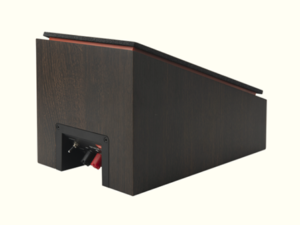
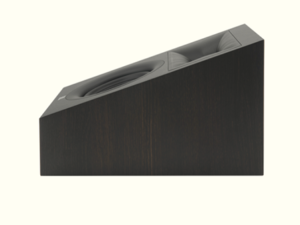
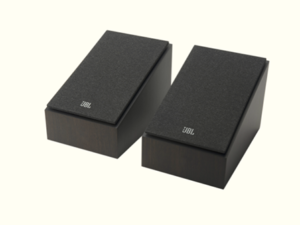
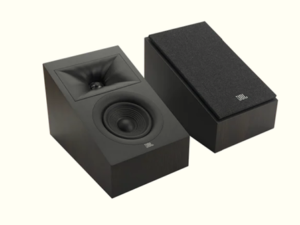
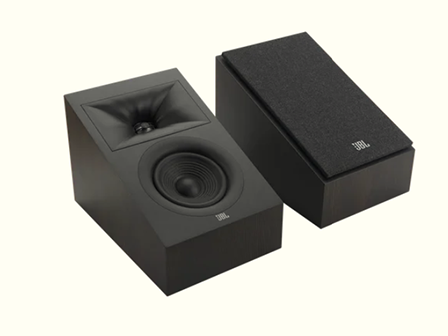
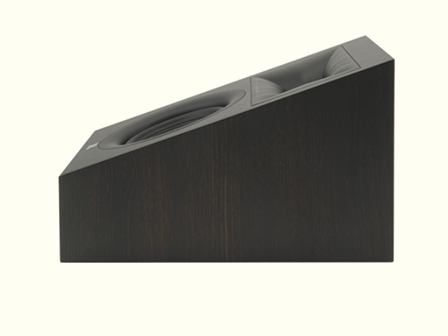
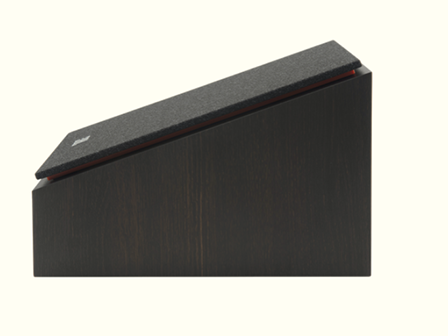
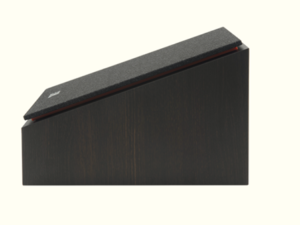 er designed to add overhead effects to a home theatre without cutting into a ceiling. Sold as a pair, it uses the same 114 mm woofer and HDI horn as the Stage 240B bookshelf model, housed in a sealed cabinet angled to bounce sound off the ceiling and back down to the listening position. For anyone living in a rented flat, or in an apartment where drilling into a reinforced concrete slab is not an option, this is the practical route to immersive audio.
What the JBL Stage 240H Actually Does
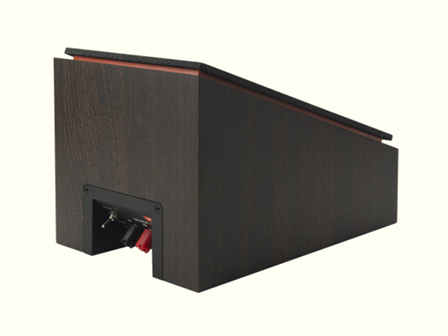
A rear-panel switch on the JBL Stage 240H changes the internal crossover between two modes. In Atmos mode, the module is tuned to sit on top of a floorstanding speaker and fire upward. In Surround/Height mode, it is tuned for direct radiation as a wall-mounted surround or elevation channel.
That single switch is the reason the JBL Stage 240H is worth considering over a dedicated height module. Systems evolve — you may start with a 5.1.2 layout and later rearrange the room, change seating, or move house entirely. A speaker that can be repurposed rather than replaced holds its value in a way that a single-purpose module does not.
JBL Stage 240H Specifications at a Glance
| Specification | Detail |
|---|---|
| Type | Dolby Atmos / surround loudspeaker, switchable modes |
| Low-frequency driver | 114 mm (4.5-inch) polycellulose ribbed cone |
| High-frequency driver | 25 mm (1-inch) anodised aluminium dome |
| Waveguide | Next-generation HDI horn |
| Frequency response (±6 dB) | 85 Hz – 25 kHz |
| Frequency response (±3 dB) | 100 Hz – 25 kHz |
| Sensitivity (1 m, 2.83 V) | 87 dB |
| Nominal impedance | 6 ohms |
| Crossover frequency | 1.6 kHz |
| RMS power handling | 75 W |
| Recommended amplifier power | 20 – 150 W |
| Enclosure | Sealed |
| Terminals | 5-way binding posts |
| Mounting | Integrated wall bracket plus 1/4-20 threaded insert |
| Dimensions (H × W × D) | 176 × 180 × 270 mm |
| Weight | 3.45 kg each |
| Finishes | Espresso or Latte woodgrain |
Figures are published by Harman and may be revised without notice — confirm against the official JBL product page before ordering.
Note the sealed enclosure. Unlike the ported models in this range, the JBL Stage 240H needs no rear clearance for a port to breathe, which is precisely what makes tight wall and ceiling placements workable.
Three Ways to Install It
As an Atmos topper on a Stage 2 tower
This is the intended role. The JBL Stage 240H sits on the top surface of a Stage 260F or 280F floorstander, and the tower’s dedicated passthrough binding posts route the height-channel wiring internally. No cable runs down the side of the cabinet, and the finished installation looks like a single speaker rather than a stack.
As a wall-mounted height or elevation channel
Switch to Surround/Height mode and use the supplied bracket, or the 1/4-20 insert with an aftermarket mount. This is the better option when your front speakers are bookshelf models with no flat top surface.
As a conventional surround channel
In the same mode, the JBL Stage 240H works as a side or rear surround. Because it shares drivers and voicing with the rest of the Stage 2 line, panning effects move across the room without any audible shift in tonal character.
Will Upward-Firing Height Work in Your Room?
This deserves an honest answer before you buy, because upward-firing modules depend entirely on the ceiling. Dolby’s own guidance states that Atmos-enabled speakers perform best in rooms with ceilings between 2.3 and 4.3 metres that have acoustically reflective surfaces such as drywall or plaster — full details are in the official Dolby Atmos speaker setup guide.
For Indian homes, that translates into a few practical checks:
- Flat RCC or gypsum false ceilings work well. Both are reflective enough to return the sound cleanly.
- Standard 9–10 foot ceiling heights are ideal. Very high ceilings weaken the reflection considerably.
- Sloped ceilings, exposed beams and heavily coffered false ceilings are a problem. They scatter the reflection rather than returning it to the seating area.
- Fabric or acoustic-tile ceilings absorb rather than reflect. In-ceiling speakers are the better answer there.
If your ceiling fails these tests, the JBL Stage 240H is still useful in Surround/Height mode as a wall-mounted elevation speaker — it simply will not perform as an up-firing module.
Wiring the JBL Stage 240H Correctly
Height channels need their own amplifier channels. Your AV receiver must support Dolby Atmos and offer at least seven amplified channels for a 5.1.2 layout, with the height pair assigned to the height or Atmos outputs in the setup menu.
One mistake to avoid: never parallel the height terminals with your main speaker terminals. Dolby explicitly warns that wiring height speakers this way produces an inaccurate result, because the module then reproduces front-channel content instead of the discrete overhead objects in the mix. The reasoning is set out in the Dolby Atmos home theatre installation guidelines (PDF).
A few further pointers:
- Cross over at 100–120 Hz. Response begins rolling off below 100 Hz, so send everything lower to the subwoofer.
- Run room correction after installation. Audyssey, YPAO or Dirac Live will set distance and level for the reflected path, which is longer than the direct path and easy to get wrong by ear.
- Install four JBL Stage 240H modules if your receiver allows it. Dolby recommends four height speakers for accurate overhead imaging; two is the practical minimum.
- Set the mode switch before mounting. It is far easier to reach on a table than on a wall bracket.
Who Should Buy the JBL Stage 240H?
A strong match if you already own or plan to buy Stage 260F or 280F towers, rent your home and cannot install in-ceiling speakers, have a flat concrete or gypsum ceiling at normal height, or want the flexibility to switch a speaker between height and surround duty later.
Look elsewhere if you have a sloped, beamed or acoustically absorbent ceiling, want a speaker that can run full range on its own, or already have in-ceiling speakers installed, which will always outperform a reflected path.
Frequently Asked Questions
Does the JBL Stage 240H need a Dolby Atmos receiver?
Yes. The module is passive and carries no processing of its own, so your AV receiver must decode Atmos and provide dedicated height channels.
Can it be used with non-JBL tower speakers?
Yes, provided the tower has a flat top surface wide enough to support it. You will need to run the height cable externally, since the internal passthrough is a Stage 2 feature.
Is it sold as a pair?
Yes, this listing covers a pair. Since Dolby recommends four height channels where possible, buyers planning a 5.1.4 or 7.1.4 system will need two pairs.
What warranty applies in India?
Authorised Harman dealers supply the standard manufacturer warranty. Grey-market imports cannot be serviced in India, so buy only through an authorised channel.
JBL Stage 240H (Pair): Dolby Atmos Height Without Touching Your Ceiling
The JBL Stage 240H is a compact, switchable height and surround loudspeak er designed to add overhead effects to a home theatre without cutting into a ceiling. Sold as a pair, it uses the same 114 mm woofer and HDI horn as the Stage 240B bookshelf model, housed in a sealed cabinet angled to bounce sound off the ceiling and back down to the listening position. For anyone living in a rented flat, or in an apartment where drilling into a reinforced concrete slab is not an option, this is the practical route to immersive audio.
What the JBL Stage 240H Actually Does
A rear-panel switch on the JBL Stage 240H changes the internal crossover between two modes. In Atmos mode, the module is tuned to sit on top of a floorstanding speaker and fire upward. In Surround/Height mode, it is tuned for direct radiation as a wall-mounted surround or elevation channel.
That single switch is the reason the JBL Stage 240H is worth considering over a dedicated height module. Systems evolve — you may start with a 5.1.2 layout and later rearrange the room, change seating, or move house entirely. A speaker that can be repurposed rather than replaced holds its value in a way that a single-purpose module does not.
JBL Stage 240H Specifications at a Glance
| Specification | Detail |
|---|---|
| Type | Dolby Atmos / surround loudspeaker, switchable modes |
| Low-frequency driver | 114 mm (4.5-inch) polycellulose ribbed cone |
| High-frequency driver | 25 mm (1-inch) anodised aluminium dome |
| Waveguide | Next-generation HDI horn |
| Frequency response (±6 dB) | 85 Hz – 25 kHz |
| Frequency response (±3 dB) | 100 Hz – 25 kHz |
| Sensitivity (1 m, 2.83 V) | 87 dB |
| Nominal impedance | 6 ohms |
| Crossover frequency | 1.6 kHz |
| RMS power handling | 75 W |
| Recommended amplifier power | 20 – 150 W |
| Enclosure | Sealed |
| Terminals | 5-way binding posts |
| Mounting | Integrated wall bracket plus 1/4-20 threaded insert |
| Dimensions (H × W × D) | 176 × 180 × 270 mm |
| Weight | 3.45 kg each |
| Finishes | Espresso or Latte woodgrain |
Figures are published by Harman and may be revised without notice — confirm against the official JBL product page before ordering.
Note the sealed enclosure. Unlike the ported models in this range, the JBL Stage 240H needs no rear clearance for a port to breathe, which is precisely what makes tight wall and ceiling placements workable.
Three Ways to Install It
As an Atmos topper on a Stage 2 tower
This is the intended role. The JBL Stage 240H sits on the top surface of a Stage 260F or 280F floorstander, and the tower’s dedicated passthrough binding posts route the height-channel wiring internally. No cable runs down the side of the cabinet, and the finished installation looks like a single speaker rather than a stack.
As a wall-mounted height or elevation channel
Switch to Surround/Height mode and use the supplied bracket, or the 1/4-20 insert with an aftermarket mount. This is the better option when your front speakers are bookshelf models with no flat top surface.
As a conventional surround channel
In the same mode, the JBL Stage 240H works as a side or rear surround. Because it shares drivers and voicing with the rest of the Stage 2 line, panning effects move across the room without any audible shift in tonal character.
Will Upward-Firing Height Work in Your Room?
This deserves an honest answer before you buy, because upward-firing modules depend entirely on the ceiling. Dolby’s own guidance states that Atmos-enabled speakers perform best in rooms with ceilings between 2.3 and 4.3 metres that have acoustically reflective surfaces such as drywall or plaster — full details are in the official Dolby Atmos speaker setup guide.
For Indian homes, that translates into a few practical checks:
- Flat RCC or gypsum false ceilings work well. Both are reflective enough to return the sound cleanly.
- Standard 9–10 foot ceiling heights are ideal. Very high ceilings weaken the reflection considerably.
- Sloped ceilings, exposed beams and heavily coffered false ceilings are a problem. They scatter the reflection rather than returning it to the seating area.
- Fabric or acoustic-tile ceilings absorb rather than reflect. In-ceiling speakers are the better answer there.
If your ceiling fails these tests, the JBL Stage 240H is still useful in Surround/Height mode as a wall-mounted elevation speaker — it simply will not perform as an up-firing module.
Wiring the JBL Stage 240H Correctly
Height channels need their own amplifier channels. Your AV receiver must support Dolby Atmos and offer at least seven amplified channels for a 5.1.2 layout, with the height pair assigned to the height or Atmos outputs in the setup menu.
One mistake to avoid: never parallel the height terminals with your main speaker terminals. Dolby explicitly warns that wiring height speakers this way produces an inaccurate result, because the module then reproduces front-channel content instead of the discrete overhead objects in the mix. The reasoning is set out in the Dolby Atmos home theatre installation guidelines (PDF).
A few further pointers:
- Cross over at 100–120 Hz. Response begins rolling off below 100 Hz, so send everything lower to the subwoofer.
- Run room correction after installation. Audyssey, YPAO or Dirac Live will set distance and level for the reflected path, which is longer than the direct path and easy to get wrong by ear.
- Install four JBL Stage 240H modules if your receiver allows it. Dolby recommends four height speakers for accurate overhead imaging; two is the practical minimum.
- Set the mode switch before mounting. It is far easier to reach on a table than on a wall bracket.
Who Should Buy the JBL Stage 240H?
A strong match if you already own or plan to buy Stage 260F or 280F towers, rent your home and cannot install in-ceiling speakers, have a flat concrete or gypsum ceiling at normal height, or want the flexibility to switch a speaker between height and surround duty later.
Look elsewhere if you have a sloped, beamed or acoustically absorbent ceiling, want a speaker that can run full range on its own, or already have in-ceiling speakers installed, which will always outperform a reflected path.
Frequently Asked Questions
Does the JBL Stage 240H need a Dolby Atmos receiver?
Yes. The module is passive and carries no processing of its own, so your AV receiver must decode Atmos and provide dedicated height channels.
Can it be used with non-JBL tower speakers?
Yes, provided the tower has a flat top surface wide enough to support it. You will need to run the height cable externally, since the internal passthrough is a Stage 2 feature.
Is it sold as a pair?
Yes, this listing covers a pair. Since Dolby recommends four height channels where possible, buyers planning a 5.1.4 or 7.1.4 system will need two pairs.
What warranty applies in India?
Authorised Harman dealers supply the standard manufacturer warranty. Grey-market imports cannot be serviced in India, so buy only through an authorised channel.
JBL Stage 240H (Pair): Dolby Atmos Height Without Touching Your Ceiling
The JBL Stage 240H is a compact, switchable height and surround loudspeak er designed to add overhead effects to a home theatre without cutting into a ceiling. Sold as a pair, it uses the same 114 mm woofer and HDI horn as the Stage 240B bookshelf model, housed in a sealed cabinet angled to bounce sound off the ceiling and back down to the listening position. For anyone living in a rented flat, or in an apartment where drilling into a reinforced concrete slab is not an option, this is the practical route to immersive audio.
What the JBL Stage 240H Actually Does
A rear-panel switch on the JBL Stage 240H changes the internal crossover between two modes. In Atmos mode, the module is tuned to sit on top of a floorstanding speaker and fire upward. In Surround/Height mode, it is tuned for direct radiation as a wall-mounted surround or elevation channel.
That single switch is the reason the JBL Stage 240H is worth considering over a dedicated height module. Systems evolve — you may start with a 5.1.2 layout and later rearrange the room, change seating, or move house entirely. A speaker that can be repurposed rather than replaced holds its value in a way that a single-purpose module does not.
JBL Stage 240H Specifications at a Glance
| Specification | Detail |
|---|---|
| Type | Dolby Atmos / surround loudspeaker, switchable modes |
| Low-frequency driver | 114 mm (4.5-inch) polycellulose ribbed cone |
| High-frequency driver | 25 mm (1-inch) anodised aluminium dome |
| Waveguide | Next-generation HDI horn |
| Frequency response (±6 dB) | 85 Hz – 25 kHz |
| Frequency response (±3 dB) | 100 Hz – 25 kHz |
| Sensitivity (1 m, 2.83 V) | 87 dB |
| Nominal impedance | 6 ohms |
| Crossover frequency | 1.6 kHz |
| RMS power handling | 75 W |
| Recommended amplifier power | 20 – 150 W |
| Enclosure | Sealed |
| Terminals | 5-way binding posts |
| Mounting | Integrated wall bracket plus 1/4-20 threaded insert |
| Dimensions (H × W × D) | 176 × 180 × 270 mm |
| Weight | 3.45 kg each |
| Finishes | Espresso or Latte woodgrain |
Figures are published by Harman and may be revised without notice — confirm against the official JBL product page before ordering.
Note the sealed enclosure. Unlike the ported models in this range, the JBL Stage 240H needs no rear clearance for a port to breathe, which is precisely what makes tight wall and ceiling placements workable.
Three Ways to Install It
As an Atmos topper on a Stage 2 tower
This is the intended role. The JBL Stage 240H sits on the top surface of a Stage 260F or 280F floorstander, and the tower’s dedicated passthrough binding posts route the height-channel wiring internally. No cable runs down the side of the cabinet, and the finished installation looks like a single speaker rather than a stack.
As a wall-mounted height or elevation channel
Switch to Surround/Height mode and use the supplied bracket, or the 1/4-20 insert with an aftermarket mount. This is the better option when your front speakers are bookshelf models with no flat top surface.
As a conventional surround channel
In the same mode, the JBL Stage 240H works as a side or rear surround. Because it shares drivers and voicing with the rest of the Stage 2 line, panning effects move across the room without any audible shift in tonal character.
Will Upward-Firing Height Work in Your Room?
This deserves an honest answer before you buy, because upward-firing modules depend entirely on the ceiling. Dolby’s own guidance states that Atmos-enabled speakers perform best in rooms with ceilings between 2.3 and 4.3 metres that have acoustically reflective surfaces such as drywall or plaster — full details are in the official Dolby Atmos speaker setup guide.
For Indian homes, that translates into a few practical checks:
- Flat RCC or gypsum false ceilings work well. Both are reflective enough to return the sound cleanly.
- Standard 9–10 foot ceiling heights are ideal. Very high ceilings weaken the reflection considerably.
- Sloped ceilings, exposed beams and heavily coffered false ceilings are a problem. They scatter the reflection rather than returning it to the seating area.
- Fabric or acoustic-tile ceilings absorb rather than reflect. In-ceiling speakers are the better answer there.
If your ceiling fails these tests, the JBL Stage 240H is still useful in Surround/Height mode as a wall-mounted elevation speaker — it simply will not perform as an up-firing module.
Wiring the JBL Stage 240H Correctly
Height channels need their own amplifier channels. Your AV receiver must support Dolby Atmos and offer at least seven amplified channels for a 5.1.2 layout, with the height pair assigned to the height or Atmos outputs in the setup menu.
One mistake to avoid: never parallel the height terminals with your main speaker terminals. Dolby explicitly warns that wiring height speakers this way produces an inaccurate result, because the module then reproduces front-channel content instead of the discrete overhead objects in the mix. The reasoning is set out in the Dolby Atmos home theatre installation guidelines (PDF).
A few further pointers:
- Cross over at 100–120 Hz. Response begins rolling off below 100 Hz, so send everything lower to the subwoofer.
- Run room correction after installation. Audyssey, YPAO or Dirac Live will set distance and level for the reflected path, which is longer than the direct path and easy to get wrong by ear.
- Install four JBL Stage 240H modules if your receiver allows it. Dolby recommends four height speakers for accurate overhead imaging; two is the practical minimum.
- Set the mode switch before mounting. It is far easier to reach on a table than on a wall bracket.
Who Should Buy the JBL Stage 240H?
A strong match if you already own or plan to buy Stage 260F or 280F towers, rent your home and cannot install in-ceiling speakers, have a flat concrete or gypsum ceiling at normal height, or want the flexibility to switch a speaker between height and surround duty later.
Look elsewhere if you have a sloped, beamed or acoustically absorbent ceiling, want a speaker that can run full range on its own, or already have in-ceiling speakers installed, which will always outperform a reflected path.
Frequently Asked Questions
Does the JBL Stage 240H need a Dolby Atmos receiver?
Yes. The module is passive and carries no processing of its own, so your AV receiver must decode Atmos and provide dedicated height channels.
Can it be used with non-JBL tower speakers?
Yes, provided the tower has a flat top surface wide enough to support it. You will need to run the height cable externally, since the internal passthrough is a Stage 2 feature.
Is it sold as a pair?
Yes, this listing covers a pair. Since Dolby recommends four height channels where possible, buyers planning a 5.1.4 or 7.1.4 system will need two pairs.
What warranty applies in India?
Authorised Harman dealers supply the standard manufacturer warranty. Grey-market imports cannot be serviced in India, so buy only through an authorised channel.